
Complete Guide to Repairing Metal Fuel, Water and Industrial Tanks
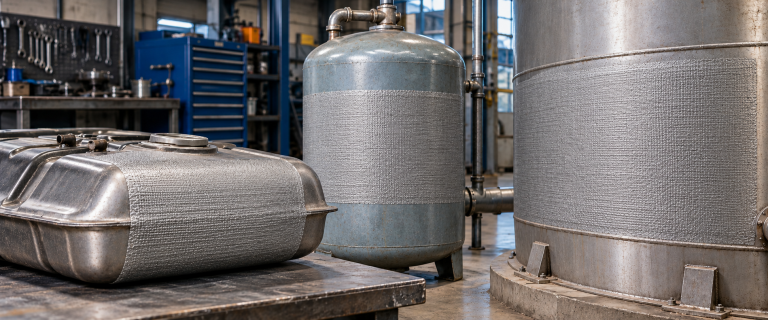
After TPRS™Applied
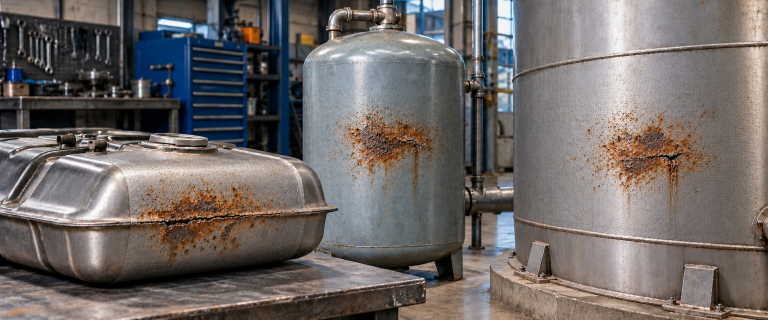
Before the Tech Patches are applied
Unlike conventional repairs that depend primarily on mechanical attachment or surface adhesion,The Tech Patch Repair System TPRS™) creates a bonded composite repair through the interface between the Tech Patch and the tank substrate and between the layers of Tech Patches or Tech Wraps. This integrated bond distributes loads across the repair area, helps block moisture from reaching the damaged metal and allows the patch to become part of the repaired structure. Either our proprietary Silica Fill or Poly Fill can first restore cracks, holes, pits and missing materials. The bonded Tech Patch/Wraps then seals and reinforces the entire prepared area while extending onto sound metal around its perimeter.
Common metal tank materials include:
- Carbon or mild steel
- Stainless steel
- Aluminum
- Galvanized steel
- Cast iron
- Copper
- Specialty alloys, including nickel alloys and titanium
The repair method can use Silica Fill, Poly Fill, a bonded Tech Patch/Tech Wrap, or a combination of other materials, depending on the damage, to restore the the damaged area of the tank. Commercial applications will get two layers of patch while a single repairer can usually get by with one layer of patch.
Corrosion Always Takes Something Away
It is important to understand that corrosion consumes metal. Every time corrosion occurs, some portion of the tank wall is lost, reducing thickness and creating pits, irregular surfaces and stress concentrations where cracks and leaks can begin. Light surface corrosion may not immediately threaten a tank’s integrity, but corrosion never strengthens the structure—and continued exposure to moisture, chemicals or environmental conditions allows the damage to progress. Repairing and sealing the affected area early helps restore integrity, helps prevent moisture intrusion to prevent a localized problem from becoming a costly tank replacement.
Because corrosion removes metal and reduces the thickness and strength of the tank wall, Tech-Bond recommends two layers of Tech Patch material for most tank repairs. The second bonded layer increases reinforcement, distributes loads across a larger area and provides an additional barrier against moisture intrusion. Depending on the tank’s contents, pressure, temperature, operating conditions and extent of metal loss, more than two layers may be recommended to provide the appropriate level of reinforcement and protection.
Patches work on all types of metal. What can change things is what the tank contains.
TPRS™ can be used to repair tanks made from carbon steel, stainless steel, aluminum, galvanized steel, cast iron, copper and many specialty alloys. The tank material determines the required surface preparation, but its contents determine the repair design. Water, fuel, chemicals, pressure, temperature and operating conditions can affect material compatibility, patch configuration and whether Silica Fill, Poly Fill or additional reinforcement is required. Every repair must therefore be evaluated according to both the tank substrate and what the tank contains.
Why PTFE-Coated E-Glass Fabric Is the Best Material for Tank and Pipe Repairs
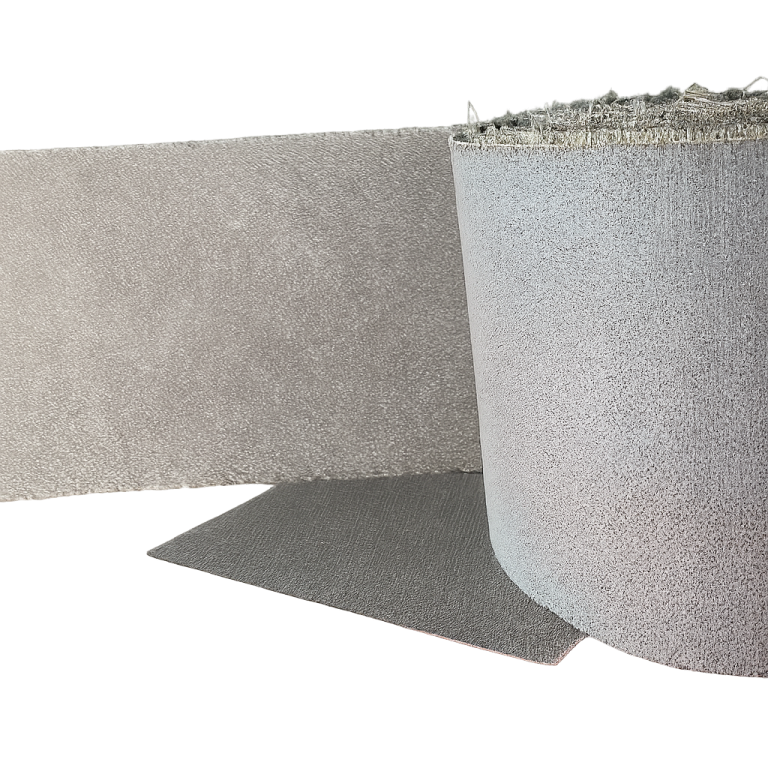
PTFE-coated E-glass fabric combines two high-performance materials into one exceptionally durable repair reinforcement. The woven E-glass fibers provide high tensile strength, dimensional stability and resistance to stretching, while remaining flexible enough to conform to curved, irregular and difficult tank and pipe surfaces. The PTFE coating adds resistance to moisture, chemicals, weathering, abrasion and temperature changes, helping protect both the reinforcing fibers and the repaired substrate from the conditions that caused or accelerated the original damage.
When bonded through the interface using the Tech-Bond’s patented Polymer Bonding Process, the fabric does more than cover the damaged area. It becomes part of an integrated composite repair that distributes stress across the patch or wrap, reinforces weakened material and creates a continuous barrier against moisture intrusion. Additional layers bond to one another as well as to the underlying substrate, allowing the repair to be designed for the tank’s or pipe’s condition, contents and operating environment. This combination of strength, conformability, chemical resistance and long-term barrier protection for moisture makes PTFE-coated E-glass fabric the best material for Tech Patches and Tech Wraps.
As the Bonding Agent integrates with the prepared materials through the interface, the completed bond takes on important performance characteristics of the bonded substrates, increasing the repair’s resistance to fuels, moisture instrusion, environmental exposure and long-term service conditions.
Add Your Heading Text Here
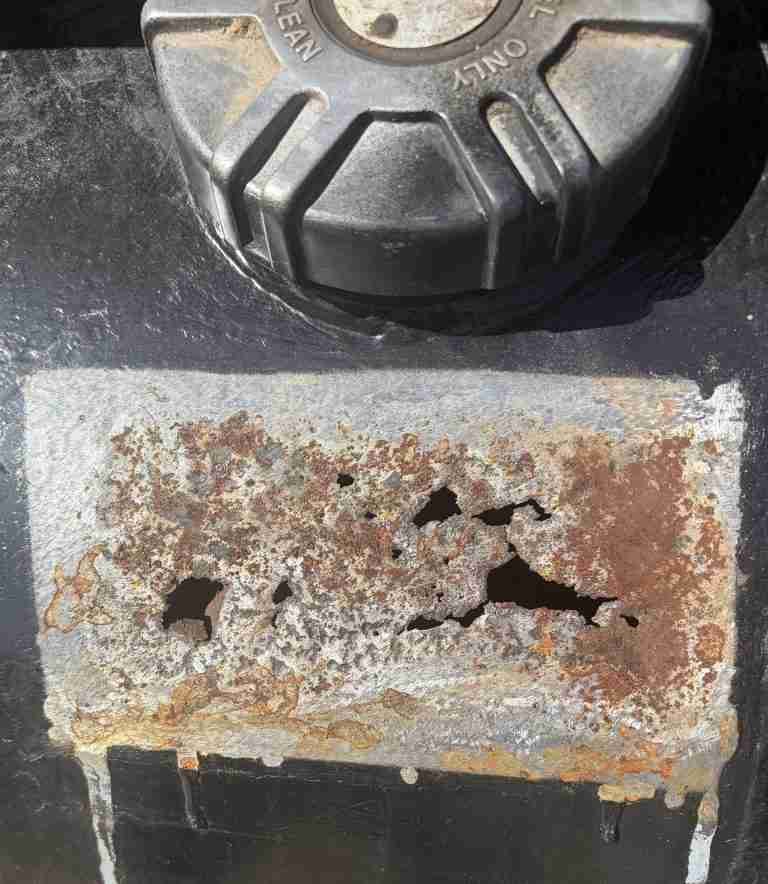
Before Surface Preparation
The corrosion, the pitting, the holes, the lost of metal are all evident.
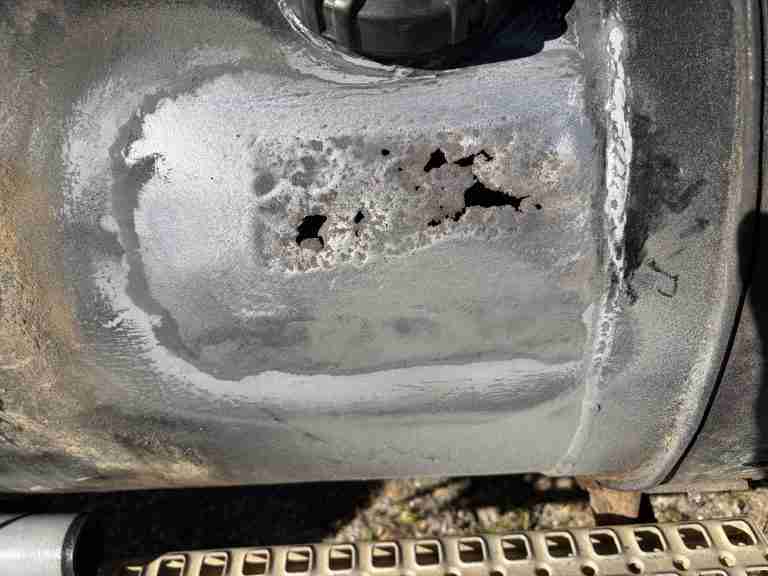
A Well Prepared Surface
The tank surface has been roughed down to the base substrate.
The pictures are of a large metal tank from a damaged gas tank of a semi tractor
The damaged area of the metal fuel tank was thoroughly cleaned, abraded and prepared beyond the visible damage to expose a stable base substrate. Removing corrosion, contamination and surface coatings created a sound bonding area for the completed Tech Patch repair. Two layers of patch were applied. With metal tanks, surface prep is the key to success.
When is a patch needed? When is a wrap appropriate?
When Should You Use a Tech Patch—and When Should You Use a Tech Wrap?
When a Tech Patch or Tech Wrap is bonded to an HDPE or other plastic pipe or tank, the repair creates a polymer-to-polymer bonded structure. These bonds rank among the strongest produced by the Polymer Bonding Process and provide excellent resistance to pressure, separation, vibration and environmental exposure. Because the repair is bonded through the interface, pressure is distributed across the entire prepared bonding area rather than being concentrated only at the damaged location.
When a Tech Patch Is Usually Sufficient
A Tech Patch is the preferred repair for most localized damage, including small holes, punctures, cracks and isolated areas of deterioration. The patch must extend well beyond the damaged area in every direction and be bonded to properly conditioned, structurally sound substrate.
A correctly installed patch can withstand substantial pressure. On metal pipe, a patch is generally capable of handling the normal water pressures found in a house. On plastic pipes and tanks, polymer-to-polymer bonding makes a patch effective for many applications—even when meaningful internal pressure is present. Pressure alone does not automatically require a complete wrap.
When a Tech Wrap Should Be Used
Use a Tech Wrap when the damage is extensive, extends around a significant portion of the pipe, involves a circumferential crack or affects an area that cannot be adequately stabilized with a localized patch. A wrap should also be considered when the pipe is exposed to high or rapidly changing pressure, severe vibration, repeated thermal cycling, substantial movement or safety-critical service.
Because a wrap surrounds the pipe, it distributes loads across a larger surface area and provides reinforcement from every direction. It also supplies additional protection when the condition of the surrounding substrate, the full extent of the damage or the future operating conditions cannot be determined with confidence.
The Practical Rule
Use a Tech Patch when the damage is localized, the surrounding substrate is sound and the patch can extend sufficiently beyond every edge of the damaged area. Use a Tech Wrap when the damage is extensive, the service conditions are unusually demanding or greater reinforcement and load distribution are needed.
If there is ever a question about whether a patch will provide sufficient reinforcement, use a Tech Wrap.