
Introducing the Polymer Bonding Process: How It Works and Why It Matters
What is the Polymer Bonding Process
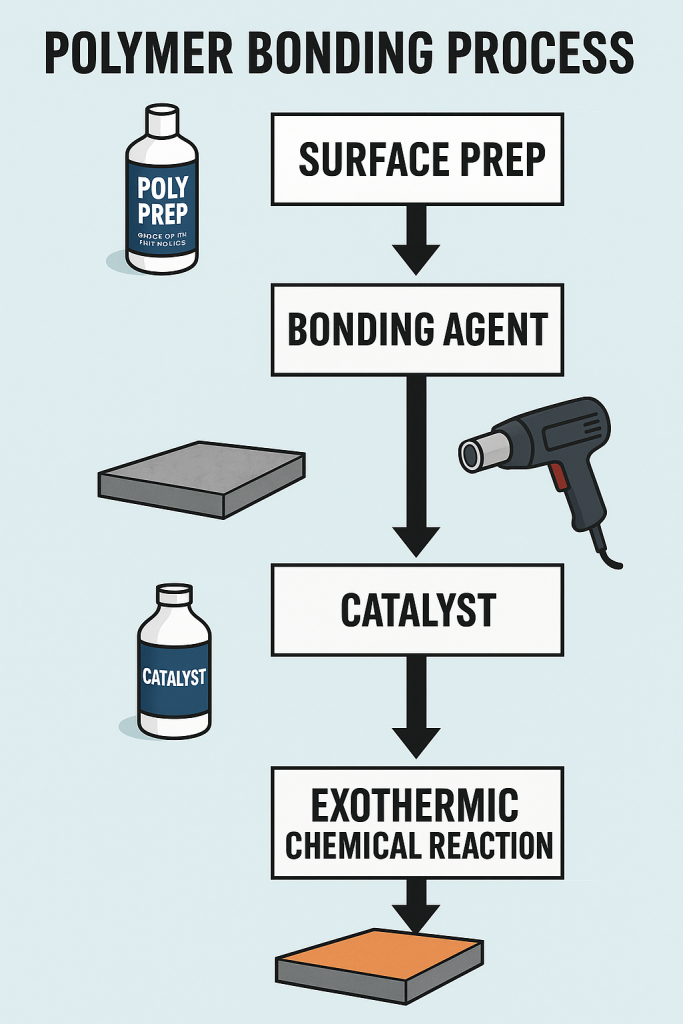
What Is the Polymer Bonding Process? The Polymer Bonding Process (Process) is a patented system designed to create molecular bonds between polymers—or between polymers and other materials such as metals or composites. Executed poperly, tThe Process eliminates delivers permanent results even in demanding environments.
At the core of the Process is a sequence of:
- Surface Primer, the Poly Prep, mocroscopically etches the polymer surface to improve the quality of the bond.
- Bonding Agent – The Bonding Agent is a monomer. Monomers are teactive units that, as part of a string, are always reaching out for the next link.”
- Catalyst – Activates a molecular-level reaction when it contacts the bonding agent.
- Heat Activation – When combined with the catalyst, a modest increase in temperature (~120°F) triggers an exothermic chemcial reaction, produces a molecular bond between the substrates.
This results in a permanent bond that resists pressure, temperature fluctuations, and chemical degradation.
⚙️ Why It Matters
The Process redefines what’s possible in field and industrial repairs:
- ✅ Works where nothing else does: PTFE, HDPE, silicone rubber, and even polyethylene to aluminum—all can be bonded permanently.
- ✅ No composites. No layups.: No multi-hour curing or complex wrap procedures. Most applications take minutes.
- ✅ Permanent repairs: No peel-back, no cracking, no rework—even under pressure or in extreme temperatures.
- ✅ Field-proven: Used in mining, solar, water treatment, agriculture, and even by military and industrial contractors.
Real-World Application: TPRS and Tech Wraps
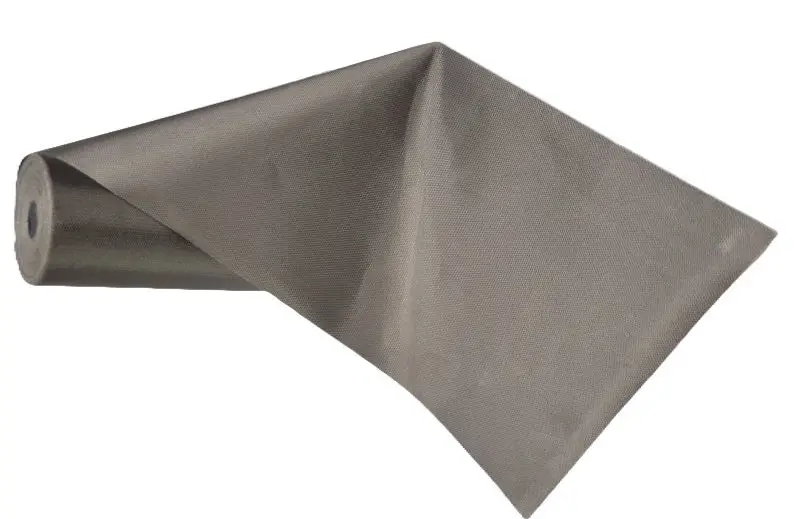
The Process powers the Tech Patch Repair System (TPRS) and Tech Wraps—used globally for sealing everything from leaking poly tanks to high-pressure steel pipelines. Unlike epoxy-based solutions or fiberglass wraps, TPRS is faster to apply, requires less surface prep, and creates a true bond, not just adhesion.
The patch and wrap material used in TPRS is PTFE-coated e-glass fabric — a composite we believe to be the most durable patch material on the planet. Its exceptional mechanical strength, chemical resistance, and thermal stability make it uniquely suited for high-performance applications. When paired with the Tech-Bond Polymer Bonding Process, TPRS’s PTFE-coated e-glass fabric sets an unmatched standard for permanent pipe and tank repair, outperforming traditional composites in every critical category.
‘
Why the Polymer Bonding Process Matters
In industries where downtime is costly and reliability is critical, conventional adhesives and composite systems often fall short. They rely on surface roughening, bulky layups, slow cure times, and still fail to bond low-surface-energy materials like HDPE, PTFE, and silicone rubber. The Polymer Bonding Process changes that—fundamentally. By creating molecular bonds rather than surface-level adhesion, it delivers permanent, field-ready results that traditional systems cannot match.
What makes this Process revolutionary is its ability to join polymers to other polymers or to dissimilar materials like steel or aluminum, even under difficult conditions. The Process requires no grinding, clamping, or curing ovens. It works in the field, in minutes, and without specialized equipment—making it ideal for industries like mining, solar, utilities, agriculture, and manufacturing. Whether it’s sealing a 10,000-gallon poly water tank or repairing a steel slurry pipe, the Polymer Bonding Process offers a level of speed, precision, and permanence that sets a new industry standard.
At its core, the Process enables problem-solvers—technicians, engineers, and field teams—to bond with confidence, knowing the result won’t peel, crack, or degrade. It’s more than a bonding method. It’s a reliable tool that empowers innovation and saves time, labor, and cost in every application.