“Beyond Glue: The Power of Molecular Bonding.”
Not All Joins Are Created Equal.
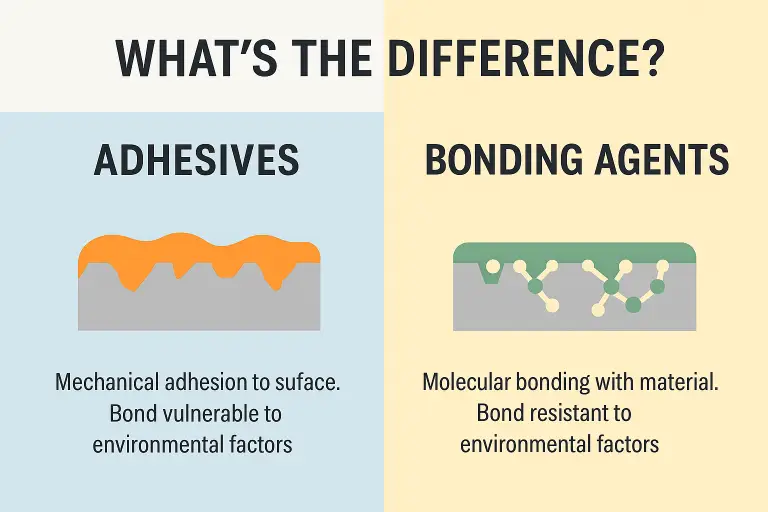
Traditional adhesives rely on surface-level attachment—gripping roughness or pores through mechanical adhesion. While some epoxies form rigid crosslinked structures, they still sit on top of the material and can fail over time when exposed to heat, moisture, or stress. Tech-Bond’s Bonding Agents, when used with our Performance Tools, go further. They chemically modify the surface and trigger a molecular reaction that forms a permanent, integrated bond—one that doesn’t just stick, but becomes part of the material itself.
Why Tech-Bond Isn’t Just a Better Glue—it’s in a Different Class Entirely
What’s the Difference?
Most adhesives—like glues and epoxies—form what’s known as a surface-level bond. They rely on mechanical adhesion, surface roughness, fillers, and internal chemical crosslinking to hold materials together. These bonds do not chemically integrate with the substrate and are vulnerable to temperature shifts, moisture, UV exposure, and chemical attack. Over time, they can crack, peel, or delaminate—especially under stress.
What Is a Bonding Agent?
A Bonding Agent is not a glue.
Tech-Bond’s SI Bonding Agents are monomeric compounds—individual molecular chains that, when activated properly, form true molecular bonds. These aren’t just surface joins. They are inter-material integrations, allowing polymers and other substrates to chemically unite under the right conditions.
The Tech-Bond Molecular Bonding System™
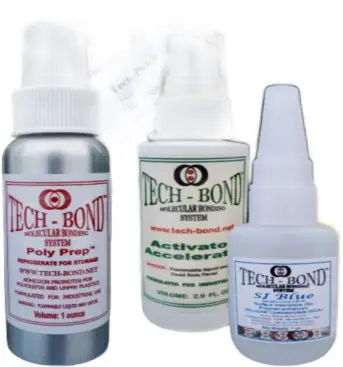
What elevates Tech-Bond’s Bonding Agents into permanent molecular bonding systems is the use of our Performance Tools, specifically:
- Activator/Accelerator (Catalyst) – triggers polymer cross-linking and initiates bonding at a molecular level
- Poly Prep (Etch) – permanently alters surface energy on difficult substrates like HDPE, PTFE, and silicone rubber
- Heat – adds energy, separating polymer molecules and accelerating their electron-seeking activity
No epoxy, glue, or standard adhesive uses this full spectrum of tools. Tech-Bond does.
Key Differences: Bonding Agent vs Adhesive
Feature | Traditional Adhesive | Tech-Bond Bonding Agent |
Bond Type | Surface adhesion | Molecular bond |
Durability | Temporary (years) | Permanent (decades+) |
Works on All Materials | Limited | Yes—with the use of the correct Performance Tool(s) |
Use of Heat & Catalyst | No | Catalyst for almost all, Heat for Polymers |
Bond Strength | Mechanical grip | Molecular integration |
Flexibility | Low to medium | Matches substrate |
Suitable for Polymers | Often fails | Yes |
Result | Glue joint | Structural transformation |
Why It Matters
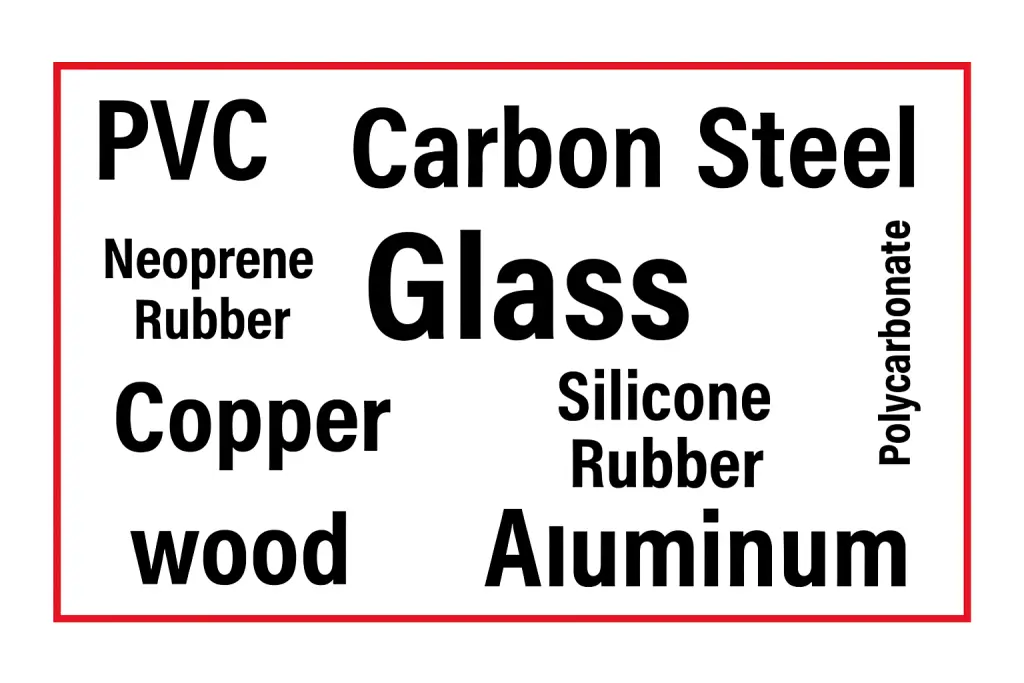
Most industries still rely on adhesives designed for wood, rubber, or metal. Polymers now dominate modern manufacturing, and adhesives weren’t built for that world. With the apprpriate Performancd Tool(s), Tech-Bond’s Bonding Agents bridge that gap – creating true, lasting bonds across even the most stubborn materials like:
- HDPE
- PTFE
- Nylon
- Silicone Rubber
- Polyurethane
- PVC
Summary
Adhesives stick
Bonding Agents bond.
And Tech-Bond’s Molecular Bonding System transforms the concept of repair and manufacturing from temporary solution to permanent transformation.