
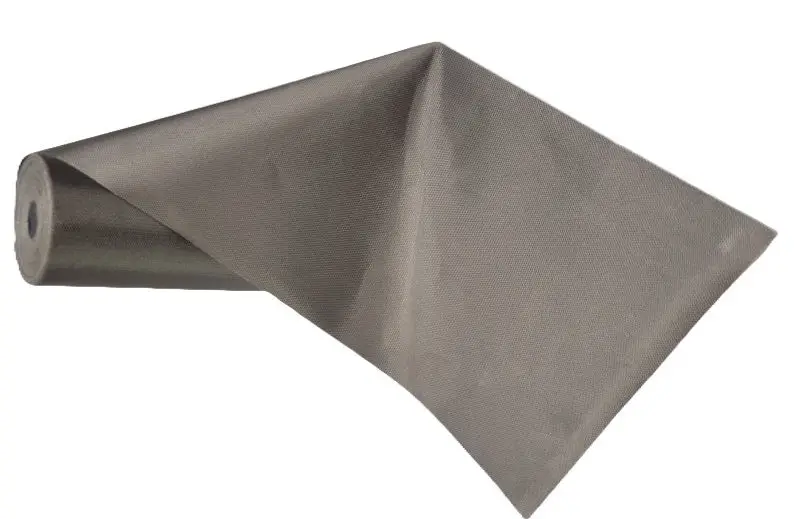
Tech Patch Repair System (TPRS™) to permantly Plastic Tanks and Pipes (Copy)
Price range: $35.95 through $324.95
Permanent repair for cracked plastic gas tanks and pipes.
Works on HDPE gas tanks and other polymers. Uses molecular integration, not adhesive bonding, to create multi-layer, fuel-proof repairs that last for the life of the tank or pipe.
Permanently Repair holes and cracks in plastic ane metal pipes tanks. This includes plastic gas tanks, plastic water tanks, and similar containers. Fix cracked plastic gas tanks—no problem. Fix cracked plastic pipes—no problem.
Most plastic gas tanks and pipes are made from HDPE. a polymer. Polymers have low energy surfaces which makes legacy adhesive and repair systems (gluea and epoxies) generally ineffective. Polymers are large molecules formed by repeating smaller chemical units called monomers. They exist in both natural and synthetic forms. Plastics are a specific type of polymer, engineered for practical use. Manufacturers modify polymers by adding stabilizers, fillers, or reinforcements. They then mold the material into finished products.
As a result, all plastics are polymers—but not all polymers are plastics. A polymer describes the molecular structure. A plastic describes the manufactured material designed for a specific job.
The Patches or Wraps of TPRS™ should extend 1 to 2 inches beyond the damage around the entire perimeter of the problem area.
Molecular Integration
Molecular Integration (MI) works differently than glues and epoxies. MI does not rely on surface grip. It does not depend on thick fillers or mechanical adhesion. Instead, the Polymer Bonding Process (Process) allows the bonding material to integrate directly with the polymer itself. Another lable for this Process is “cross-linking”.
First, surface conditioning prepares the material. Surface Conditioning includes:
- Roughing the surface to “below the sheen”,
- Clean the surface, removing all residue,
- Saturate the polymer surface with the Poly Prep. a surface primer, an etch,
- Let the surface dry. In areas of high ambient moisture, a heat gun or hair dryer can be used to assist the drying process.
Next, a catalyst is needed to activate the chemistry of the Process. Spray the prepared surface with the Activator/Accelerator (AA). Let the AA dry. Apply the Bonding Agent to the patch or the wrap. The surface of the patch or wrap does not need to be prepped. All surface conditioning for patches and the wraps have already been completed. You want to apply the Bonding Agent in small concentric circles,
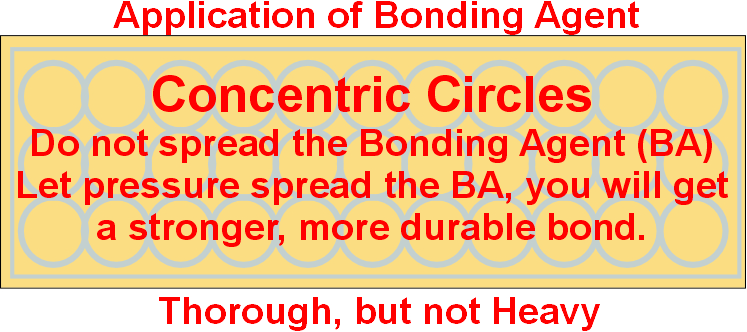
Do not spread the Bonding Agent. Spreading the
Warm the polymer surfaces
Then, precisely applied heat completes the reaction. At that point, the materials at the interface form a continuous molecular network.
Because of this, the bond stays flexible when the plastic is flexible. In addition, it is moisture-proof and fuel-proof. It is also unaffected by thermal cycling. Traditional adhesives crack, creep, or delaminate over time. Tech-Bond repairs do not.
As a result, the repair becomes permanent—for the life of the pipe or tank.
Additional information
| Width of the patch | 2", 3", 4", 5", 6", 9", 12" |
|---|---|
| Length of the Patch | 2", 3", 4", 5", 6", 9", 12", 15", 18", 21", 24" |
| Amt of Bonding Agent | 10 ml, 14 ml, 1 oz, 2 oz, 3 oz, 4 oz, 5 oz, 6 oz, 8 oz, 16 oz, 24 oz, 32 oz, 40 oz, 48 oz, 56 oz, 64 oz |
| Amt of Poly Prep (Etch) | .75 oz, 1.5 oz., 80 ml, 250 ml, Liter, Gallon |
| Amt of Catalyst (AA) | .5 oz, 1 oz, 2 oz, 8 pz, 16, Liter, Gallon |
Related products
-
-
SI Blue Bonding Agent, Individual Products
Price range: $12.95 through $1,687.95 Select options This product has multiple variants. The options may be chosen on the product page -

Individual Products, SI Gel - a Thixotropic SI Cyanoacrylate (glue)
Price range: $18.95 through $142.95 Select options This product has multiple variants. The options may be chosen on the product page -

Individual Products, Poly Prep - the Etch for Polymers
Price range: $11.95 through $1,724.95 Select options This product has multiple variants. The options may be chosen on the product page
Reviews
There are no reviews yet.